


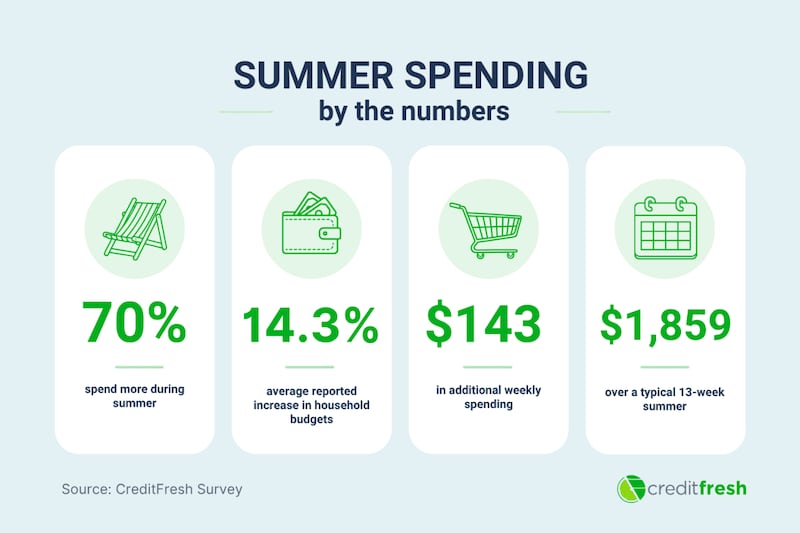
Summer can bring more time to relax and recharge and longer days, but it can also bring higher household expenses. From gasoline for road trips and everyday transportation to electricity for air conditioning, seasonal costs can put pressure on your budget. A new CreditFresh survey of 2,000 U.S. adults found that 70% of respondents spend more during the summer, with increased energy bills the most commonly cited cost pressure (41%) and higher gas costs affecting 35%. But one area where you can take some control is your utility bills. Those monthly charges for electricity, water, and natural gas can add up quickly, especially during heatwaves. The good news? There are real, simple steps you can take to potentially lower them.
The key is to start with a few smart, manageable changes you can make today to save energy, reduce your summer electric costs, and feel a little less stressed when those bills come due.
CreditFresh
First, What Are Utility Bills?
Before we dive in, let’s quickly cover the basics: What are utility bills?
Utility bills are the monthly charges you pay to keep your home running. These can be:
- Electricity bill – for all the devices and appliances you plug in
- Gas bill – usually for heating your home or water
- Water bill – covers everything from showers to laundry
Together, they make up your home energy usage and can take a serious bite out of your budget. Especially if you're seeing a high electric bill more often than not.

CreditFresh
Why Are Utility Bills So High Right Now?
Seasonal heatwaves across the U.S. can make air conditioners work harder and for longer, increasing household electricity use. The U.S. Energy Information Administration forecasts that the average residential summer electricity bill will reach $192 per month in 2026, up 3.7% from 2025, even as average electricity use declines. At the same time, higher gasoline costs and increased summer driving can put added pressure on household budgets. The impact will vary by region, local utility rates, home size, and the severity of summer heat.
But here’s the encouraging part: Even when temperatures rise, there are plenty of ways to save energy without giving up comfort.
How to Save Electricity this summer (Without Sacrificing Comfort)
1. Use Smart Thermostats Wisely
Smart thermostats can be a game-changer. They let you adjust the temperature even when you're not home and can help lower your energy usage during peak hours. They learn when you're home or away and adjust things to save energy. The U.S. Department of Energy estimates that smart temperature settings can save up to 10% on heating and cooling costs each year.
While they're not necessarily cheap, they can help you save energy and money in the long run. Some buyers may be able to get rebates or incentives on smart thermostats, which can significantly reduce the upfront cost.
2. Unplug and Use Power Strips
Even when turned off, devices still draw power. Because of this, it’s a good idea to unplug appliances that aren’t being used. To make this easier, plug electronics into a power strip and turn it off at night or when you’re out to lower phantom energy drain.
3. Cool Your Home More Efficiently
When summer heat or a heatwave hits, staying cool doesn’t have to mean cranking the AC 24/7. Here’s how to cool your home more efficiently:
- Use ceiling fans to circulate air
- Close blinds or curtains during the day to block heat
- Open windows at night to let cooler air in
You should also make sure to seal up any gaps in your windows and doors. These gaps let cold or warm air leak out. Sealing them with weatherstripping or caulk keeps your home comfy and reduces your heating and cooling costs. Little adjustments can make a big impact on your electricity bill.
4. The Water Heater: A Hidden Energy Hog
Your water heater may be quietly driving up your energy bills. Try turning it down to 120 F—it’s plenty hot for everyday needs and uses less power. And if you’re taking long, hot showers, try to shorten them by a few minutes to save energy and water.
5. Know Your Peak Time and Shift Your Habits
A lot of providers charge more during peak hours—those high-demand times when everyone's using power. If possible, run dishwashers, laundry machines, and even charge devices during off-peak times (usually late evening or early morning). It's a small shift that can mean real savings in the long run.
Budgeting Tip: What’s Your Average Monthly Bill?
Take a look at your average monthly utility costs. That number gives you a baseline to work from. From there, track changes as you put these tips into play. It’s encouraging to see progress—and it helps you stay motivated.
More Small Ways to Save Energy This Summer
- Switch to LED bulbs: They last longer and use less power.
- Wash clothes in cold water: Most detergents are designed to work well in cooler temps.
- Air-dry when you can: Skip the dryer and hang your clothes on a rack or clothesline.
- Fix leaky faucets: Dripping water can waste gallons a day—and it shows up on your water bill.
These are all easy tweaks you can work into your routine.
Why This Matters
Learning how to save electricity and manage your summer utility bills isn’t just about dollars and cents; it’s about peace of mind. When you know your home is running more efficiently, you’re saving money while reducing your stress. And that matters, especially when seasonal expenses are adding up. Just keep in mind that the amount you can save depends on where you live, how expensive your utilities are, how many people live in your household, and more.
Summer costs aren’t always easy to avoid, but these practical, doable changes can give you back some control over your seasonal budget—and that’s powerful.
So start with one or two tips that work for your home and build from there. Small changes can make summer bills feel more manageable.
Disclaimer: Information in this article, including references to third parties, is for informational and educational purposes only and does not constitute endorsement or individualized financial or legal advice.
This story was produced by CreditFresh and reviewed and distributed by Stacker.